
ddn

David Dellanave

  • Blog
  • Programs
  • Coaching
  • Seminars
  • Contact

by david Leave a Comment

Sets Until the Cows Come Home

Sets Until the Cows Come Home

I want to tell you a quick story about my very good friend and colleague Erika Mundinger DPT, who is one of the best physical therapists I know and also happens to work part-time for me at my gym.

Erika is also one of the earliest adopters of the biofeedback protocol we use and teach today, having gone through the course very shortly after I did about a decade ago.

Last week I got a great question from a reader, who basically asked how do I figure out or know what weight to use via biofeedback?

It reminded me of Erika.

See, everyone has their own way of applying and “following” biofeedback. Some people tend to use it as a red-light/green-light for following the plan they already have laid out. Others really go all the way with it, hardly having any plan at all and just going where their body leads them.

Erika is one of the best at applying the protocol I have ever seen.

I specifically remember times when she would do set after set after set maybe fifteen or twenty sets of the same offset stagger stance kettlebell swing. She would just keep doing sets of whatever tested best until it didn’t test well anymore! Most people would do three or four and move on. But Erika might do an hour of one exercise. She is really diligent about following her body to where it wanted to go.

My point is, there are multiple ways you can apply a tool that lets you know how your body is responding to a stressor. Here’s basically what I wrote Craig in response to his question about weights:

Take a bench press as an example. You test the movement with no weight, it’s good -> you test the bar at 45, it’s good -> now you move up to 105 lbs because that is what you were working with last session, test is good.

The question is, how can I do better than I did last time? Can I do more reps & sets at this same weight? I know it tests well, so I have to mentally predict if it will be possible to do better.

The answer is a combination of knowing your weights from previous sessions, and testing to confirm that it’s good for the day.

Another option – does it test well to do 110? If so, this would be a way that I could PR if I haven’t done 110 for X sets of X reps before.

There are no wrong answers, AS LONG AS IT TESTS WELL.

Filed Under: Blog

by david Leave a Comment

A Fool for a Client

Lawyers have a saying, that a lawyer who represents himself has a fool for a client.

Why? Setting aside matters of legal specialities, an attorney doesn’t become any less competent the moment they start representing themselves. They still went to law school, they still know the laws and procedures, and they still have their cognitive reasoning skills and abilities.

It’s the same paradox as coaches or experts coaching themselves.

This has always been a bit of a conundrum for me because one of my highest values is autonomy and one of the core premises of biofeedback is that (in a sense) you can be your own best coach through evaluating your own responses.

In either case the value that an outside lawyer or coach can provide isn’t in the skills or knowledge of laws or training techniques nor is it in the discrete pieces of information or objective feedback that can be used to build a case or a plan.

The value is in the fact that humans are incredibly capable and adept at manipulating their external environments. And not so good at anything introspective.

The value that a coach provides is the ability to take a holistic and dispassionate look at the big picture and make suggestions for you to test.

It can be really, really hard to get out of your own way and not make mistakes because of what is obscured from your own observation and intuition. I discussed some reasons for this earlier in the week.

Lawyers know that representing yourself is foolish probably not least because they understand the stakes. But I have to part ways with this analogy at this point, because while you should almost always just shut up and listen to your attorney, coaching doesn’t work that way.

The benefit of the external perspective and the holistic view that a coach provides is invaluable, but when it comes to your body the suggestions from a coach are simply starting points for you to confirm against what is actually good for you.

And in fact, testing provides a good way to measure how good a coach really is, in terms of how often what is good for you actually lines up with what is recommended. But I digress, that’s a topic for another day.


Filed Under: Blog

by david Leave a Comment

Can You Trust Your Intuition

Monday’s email kicked of a conversation with one of my very, very smart friends. We were talking about biofeedback and he mentioned that he’s been monitoring and using his resting heart rate as biofeedback for some time now.

One of his observations is that when he’s at work, no matter what he does he sees an elevated resting heart rate – indicating a greater stress response.

But the interesting part of this is that the work doesn’t ​feel​ stressful to him at all. In fact it feels really easy.

So what is the explanation when your intuitive feeling says that everything is fine, but your objective biofeedback says that everything is not in fact fine?

One of the incredible features of the body is its ability to obfuscate things from you. Some of those things are simple functions like not having to think about what to set your heart rate at to keep your heart beating. Others are much more complicated like allowing you to feel completely at ease even in a stressful situation.

But the catch is, you have to take a debit from your reserve capacity to resolve stress for it to feel that way.

I want to make this really clear. Something can be stressful to you to the point of being distressful, but you won’t even notice it’s distressing because your body is tapping into various reserves to resolve that stress.

Ideally afterwards you’ll then top off those reserves with eustress like sleep, food, and regenerative exercise and nothing bad will ever come of tapping into those reserves. The magic of the body is that you don’t even need to know you’re objectively taking on more stress than you can easily resolve by tapping into those reserves.

So back to the original question. Can you trust your intuition? What does it mean when something feels totally fine. Is it really?

What is intuition? I think of it as informed experience. Little children don’t tend to have a whole lot of intuition about anything – they have neither deep nor wide experience nor have they informed that experience through feedback. Old people tend to have amazing intuition because of the amount of accumulated experience, and even greater intuition if they’ve truly been paying attention all that time to the factors surrounding those experiences.

A successful entrepreneur with multiple businesses under their belt is going to have a very reliable intuition about how things are going just by taking one look at the inner workings of a business. Giving a chef the exact same look at the business and asking for their intuitive feel of how things are going is a pointless exercise. Their intuition is honed and informed on how ingredients are going to taste when combined or how to setup a kitchen line.

The only way to be able to trust your intuition is if you’re consistently informing it.

Biofeedback is one incredibly powerful way to inform your intuition. Notice how you feel and how your body performs when you eat certain foods – that’s informed experience and it develops intuition that if you eat these things you’re going to feel bad.

In a training context the only form of biofeedback most people use is the objective output of how much weight they move. But that output varies depending on the context. You could objectively not move a lot of weight, but that might just mean you’re in a downswing of the cycle, but the movement itself is very eustressful. It’s impossible to know without having a standard measurement.

Squats might feel totally fine but that’s only because the cost of doing them is being obscured from view. You may even get away with it, but wouldn’t you rather know what the price is you’re paying?

Intuition is an incredibly powerful asset, but it’s not free. You have to invest in it to be able to use it.

Filed Under: Blog

  • « Previous Page
  • 1
  • …
  • 6
  • 7
  • 8
  • 9
  • 10
  • …
  • 82
  • Next Page »

Olive Oil

Upcoming Workshops

    No events to show

Search

David Dellanave

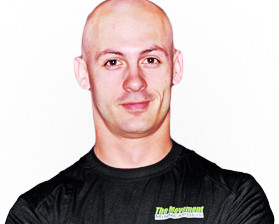
David Dellanave, known most often as ddn, is a lifter, coach, and owner of The Movement Minneapolis in the Twin Cities. He implements biofeedback in training; teaching his clients to truly understand what their bodies are telling them. He’s coached a number of athletes who compete at the international level in sports ranging from grip to rugby, and his general population clients readily demonstrate how easy it can be to make progress.

Latest Tweets

  • Just now
  • Follow me on Twitter

Important Pages

  • Coaching
  • Seminars
  • Disclaimer
  • Terms of Service
  • Privacy Policy

Comments

  • david on 3 Tips for Lifting While Sorting Through SI Joint Pain
  • David Brochin on 3 Tips for Lifting While Sorting Through SI Joint Pain
  • Ken on How to Pass the RKC Snatch Test
  • Bethuel Njoroge on Wild Game Hunting: Inhumane or The Most Humane?
  • Jennifer Matthews on 3 Tips for Lifting While Sorting Through SI Joint Pain

Copyright © 2026 · Generate Pro Theme on Genesis Framework · WordPress · Log in