
ddn

David Dellanave

  • Blog
  • Programs
  • Coaching
  • Seminars
  • Contact

by david Leave a Comment

Intuition: Your Superpower

You probably don’t realize you have a superpower.

It’s not flying like Superman, the ability to control the elements and conjure weather like Storm, or being able to rearrange matter like Jean Grey.

But this superpower is no less amazing if you think about it.

You have a superpower of being able to know things without ever having learned them or experienced them first-hand.

Allow me to explain.

Let’s start with a really simple example. You walk into a dark room you’ve never been in before, the door swings open to the right. Without looking, you reach to the left, about chest height and flick on the light.

How did you know it would be there? You didn’t know.

Another example. You get into a car you’ve never driven before. There’s no key to start the car, only a button on the dash, and the shifter is in a weird place, but in less than 10 seconds you’re pulling out and driving down the road. How did you know how to drive this car that isn’t the same as cars you’ve driven before?

Another example. In the 1950 Monaco Grand Prix legendary Argentine racer Juan Manuel Fangio blasted out of the dark tunnel into the daylight when he suddenly braked instead of staying on the gas. There was nothing visibly wrong on the track ahead, and this is one of the fastest parts of the circuit – no place for braking. But in fact, Nino Farina had slammed his car into the wall near Tabac, and eight cars had piled into him. How did Fangio know to brake when he couldn’t see the accident?

The superpower is intuition, the integration of past knowledge and experience, and present information you can subconsciously perceive but not be cognitively aware of.

This is an incredible power!

You know light switches are usually opposite the door hinges at about chest height. You have driven several cars, so you can look for common cues and functions even if you’ve never seen the exact one before. Fangio instinctively braked because he saw (but only later became aware of and was able to explain) that the fans weren’t looking towards him like normal, but they were turned to the side looking and something seemed off.

Intuition is an incredible power. The more honed your intuition the faster and better you can make decisions, to the point where they’re happening with automaticity.

The only rub with intuition is that it’s actually highly domain or context specific. You may have incredible intuition as a tennis player, but it won’t translate to being a race car driver or making medical decisions.

Which is another reason it’s so beneficial to develop a system for honing your intuition and then applying it to the widest array of domains, skills, and applications possible.

For example, biofeedback testing is the best method I’ve found for informing your intuition about what movements are going to work best for your body. It’s a systematic way to test and re-test the response. Over time what people find is that they don’t even need to test to “know” what is going to be best. You’re integrating past experience and the result of pasts tests with the unconscious perception of the responses.

Skill development allows you to broaden the library of knowledge and experience you have to draw on when using your intuition with skills. I don’t necessarily know how to use every tool in a shop (I’m getting close though) but based on my previous experience and my intuition I can figure almost anything out. People are always baffled at how I can figure out a feature or an option on an app I have never seen before when they’ve been struggling for minutes. I’ve just been using tech so deeply for so long that I recognize the common patterns and I can predict where things will be. You do this too in areas where you have deep expertise, and it’s very unlikely that you’d be able to explain your exact thought process because it’s intuitive.

Aaaaand there’s more. Intuitive conclusions have been shown to be “weighted” in sort of a Bayesian fashion based on the confidence of the intuition as it relates to previous experiences and the potential outcomes of the decision. The more you work on your intuition, the more you can trust it.

So to summarize, you already have this superpower of being able to acquire and integrate knowledge without any awareness or rational thought applied to the process that then allows you to “know” things you couldn’t possibly actually know in the rational sense and you can train and improve this ability further and further by broadening and deepening your domains. Pretty cool, to say the least.

Filed Under: Blog

by david Leave a Comment

Human Skill: How to Solder

Human Skill: How to Solder

Things are so “cheap” no one ever fixes anything anymore. Throw it away, buy a new one. Of course, you don’t see the externalized costs that make it so cheap. But lots of things can still be fixed.

Less junk in landfills, more money in your pocket, and the bonus is that a lot of times older versions of simple devices are better than their newer counterparts.

A basic skill you need for repairing small electronics is soldering. As with most hard skills it’s becoming a bit of a lost art in the world of integrated circuits, ultra-miniaturization, and disposable junk. Plus, most people have no idea how to solder and as a result think it’s harder than it is when they get really poor joints.

Soldering is actually a really simple skill that is easy to pick up when you have the right tools and materials and it’s almost guaranteed to come in handy in fixing or making something.

Peep this video tutorial that walks you through what you need, and how to make a good, strong, reliable joint.

Or view on IG TV.


Filed Under: Blog

by david Leave a Comment

Check Your Assumptions

How often have you checked in on the things that you assume to be true?

For example, I assume based on my habits and how I spend my time and money that I like coffee, skydiving, dogs, riding bikes and motorcycles, and cooking. I don’t like running, walking more than necessary, cold salads, cold press coffee, or commuting in a car. Among other things of course, but those are a few that I thought I could count on.

But it’s pretty easy to get wrapped up in those things you thought you liked and wear them as an identity, never stopping to check your assumption to make sure it’s still true.

For example, a couple years ago I started adding running into my program. After a little while (the longer you’ve assumed something to be one way, the longer it takes to break the pattern and examine it) I realized that I actually kind of liked it. I’m still never going to be a runner, but I didn’t dislike it as much as I thought I did.

A friend of mine was recently telling me that he was re-examining if he even liked video games, or if he was just playing video games because he thought he always was a gamer.

Another friend has been contemplating selling something that they’ve gotten a lot of enjoyment out of over the years, but now doesn’t seem to be giving back as much – but it’s a struggle because it’s assumed to be an integral part of their identity.

Checking your assumptions is useful in really practical matters too. When I was first trying to get my Honda Spree project running I *assumed* that there was air, fuel, and spark so therefore the engine should run. I did ​not ​think to check if air was getting OUT of the engine though, so it wasn’t until I checked the assumption that I realized the muffler was clogged.

The best part is checking or examining your assumptions isn’t a risky or costly endeavor. You might not love what you find when you go looking, but at least you’ll be one step closer to living your truth.

Filed Under: Blog

  • « Previous Page
  • 1
  • …
  • 7
  • 8
  • 9
  • 10
  • 11
  • …
  • 82
  • Next Page »

Olive Oil

Upcoming Workshops

    No events to show

Search

David Dellanave

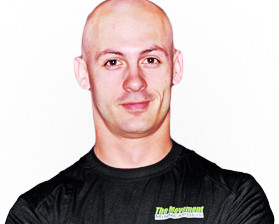
David Dellanave, known most often as ddn, is a lifter, coach, and owner of The Movement Minneapolis in the Twin Cities. He implements biofeedback in training; teaching his clients to truly understand what their bodies are telling them. He’s coached a number of athletes who compete at the international level in sports ranging from grip to rugby, and his general population clients readily demonstrate how easy it can be to make progress.

Latest Tweets

  • Just now
  • Follow me on Twitter

Important Pages

  • Coaching
  • Seminars
  • Disclaimer
  • Terms of Service
  • Privacy Policy

Comments

  • david on 3 Tips for Lifting While Sorting Through SI Joint Pain
  • David Brochin on 3 Tips for Lifting While Sorting Through SI Joint Pain
  • Ken on How to Pass the RKC Snatch Test
  • Bethuel Njoroge on Wild Game Hunting: Inhumane or The Most Humane?
  • Jennifer Matthews on 3 Tips for Lifting While Sorting Through SI Joint Pain

Copyright © 2026 · Generate Pro Theme on Genesis Framework · WordPress · Log in