ddn

David Dellanave

  • Blog
  • Programs
  • Coaching
  • Seminars
  • Contact

by david 2 Comments

Does Training Have to be Fun?

Does Training Have to be Fun?

Something that seems to be coming up a lot lately is the question of whether or not training or working out has to be fun.

Obviously, it makes it a lot easier to keep your workout routine if you enjoy every minute of it. Who wouldn’t prefer loving their workout and thinking it’s fun all the time?

There are certainly lots of activities and ways to move your body that are also enjoyable. Just to name a few off the top of my head hiking, climbing, team sports, kayaking, biking, and running are things that people think are fun but are also ways to get the heart pumping and stress your muscles.

Except, it’s not the same.

The gym and what I think of when I speak of training in general, is kind of like a mechanic shop for the human body where necessary repairs and preventative maintenance can be performed. The entire environment you live in is extremely obesogenic and harmful. Nothing about waking up to an alarm, driving to an office, sitting in a chair under neon lights all day doing work you hate, driving home and watching TV or using the computer with artificial lights on until you go to bed around midnight is good for you. In fact it is probably very literally killing you.

So it presents a need for counteracting all of this harm in very specific ways. The only way to be able to specifically address these things is by specifically addressing them – not just being generally active and hoping the base gets covered.

And it’s not always fun. My friend Maggie recently pointed out that brushing your teeth isn’t especially fun but you do it because you know it’s necessary. I love this analogy. Training isn’t always going to be fun but it’s absolutely necessary – if you want your body to keep working well and be ready and able when you want to use it to do things that ARE fun.

For sure you should line up as many things as possible to make things that make you better easier and more fun. If you absolutely hate your gym environment, then find one you like. If you hate all gyms period then suck it up and do the work. If you hate your workout program or what you’re doing, then find one you can get excited about. But if you switch from progressive resistance training that targets specific needs you have to pilates or whatever-the-fuck-bar-method is remember that you’re not longer brushing your teeth – you’re just doing an activity that is fun but probably doesn’t clean your teeth.

I can tell you from my personally experience, and I think most people would find this hard to believe, but I mostly hate training. Very rarely do I enjoy the actual process of lifting. Maybe when it’s going really well or I’m knocking down a PR. But most of it is just work that needs to get done because I like looking the way I do when I lift, I like maintaining the decade-plus investment in my physique and health, and most importantly I like the way my body functions as a result. I’m capable of throwing a fifty pound pack on my back and hiking up a mountain at 10,000 feet to chase elk on a whim with no specific preparation. At an age when most guys are declining in various functions, I’m not. That’s worth doing the work that isn’t fun.

Sometimes training is going to be fun, sometimes it’s not. You can either accept this and do what is necessary, or you can keep chasing entertainment.

Filed Under: Blog

by david Leave a Comment

Million Pound November Challenge Redux

Million Pound November Challenge Redux

It’s hard to believe that it’s been almost a decade since the first time I completed the Million Pound November challenge. I honestly had no plans to do it this year, wasn’t really ramped up and ready in terms of volume, and wasn’t even convinced I’d be able to finish it when I committed myself to it. Would I be able to do a high stress, long-term challenge that I last did when I was under 30?

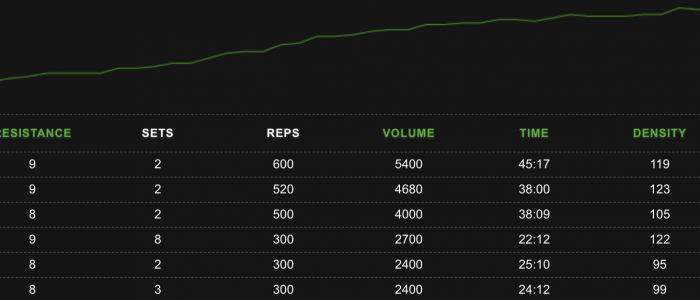
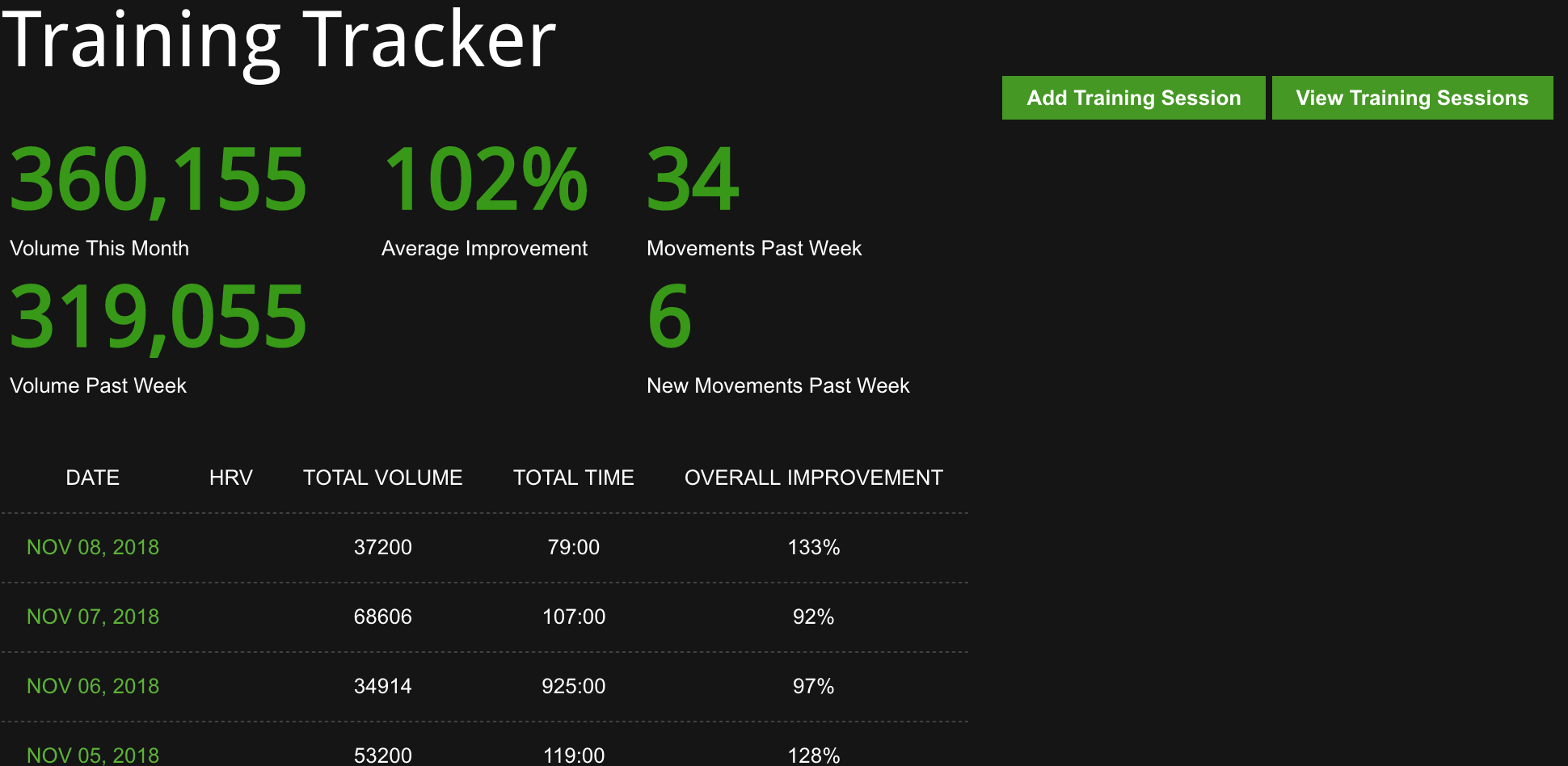
Quick recap in case you have never heard of MPN. The goal is to lift a million pounds of volume in 30 days, ideally November. This can be an individual challenge, or a group effort like we do it at The Movement Minneapolis. For perspective a typical strength or circuit workout tends to be in the 10-15,000 pound range. So you’re looking at doing two to three times typical volume every single day for a month. It’s eminently possible, but it’s not easy.

My hope whenever someone undertakes a challenge is that they’ll learn something from it, regardless of whether or not they actually complete it. Million Pound is one of the favorite programs we run  Throughout the challenge I try to foster this by asking people what they’re noticing, how they’re feeling, what seems different, and so on.

This time around I noticed some things that were distinctly different than the last time I completed it. I should note, I’ve only really committed to it twice, and completed it twice. There have been fits and starts over the years where I didn’t dedicated myself to it, but I never tried and failed due to not being able to complete it.

Due to a week of travel smack in the middle of the month, I was forced to compress all of my training into two bouts of twelve, and eleven days consecutive days with a gap in the middle of six days with only one training day. So basically 23 total training days in two streaks.

This was, in a word, not ideal.

By the end of each of the two streaks I was feeling almost insurmountable fatigue and lack of desire to train. Under any other circumstances I would have taken days off before I even got to that point, but it was interesting to see how far I could actually keep going, and continue to find things that tested well via biofeedback. I don’t remember feeling that sort of fatigue last time, which I don’t know if I can attribute to not taking days off along the way or to simply being almost ten years older.

Perhaps the only thing that kept me healthy was that I respected the significantly increased need for sleep, and I made sure to get to sleep early, and take a mid-day nap if necessary.

So the big lesson for me was that if I’m pushing volume to the limit, about five days is where things start going downhill.

Whether or not you succeeded is irrelevant in this. What did you learn?

Filed Under: Blog

by david Leave a Comment

If Only I Had Known

If Only I Had Known

This past weekend I was remotely coaching my friend Jane through baking her first loaf of sourdough bread. There were several points at which it was just impossible for me to describe the exact right step to take or how long to wait exactly between one thing and another. It made me think of another situation…

I’ve been looking at picking up a very old vintage Vespa as a restoration project. Something I’ve noticed play out over previous projects is that I do as much research as I know to do beforehand, but no matter how much I seem to do as soon as I actually get my hands dirty on the project I end up learning things that I wish I had known before I got started. The problem is, I don’t even know what questions to ask before I get my eyes and hands on it.

It all goes back to this concept you’re familiar with if you’ve been reading my writing for awhile: metis.

There exists an entire category of knowledge that is impossible to make legible and transfer from one person to another. No more can I describe all the subtle visual, olfactory, and tactile cues you’re paying attention to throughout bread making that you need to make adjustments based on than someone can write down all the specific possibilities and variables that could exist in a Vespa (or whatever) restoration project that could help you avoid a costly mistake down the road.

These are things that can only be learned through direct experience.

That doesn’t mean that you can’t find an answer to specific questions, but often times you don’t even know what questions to ask before gaining the experience.

What ever could this possibly have to do with fitness?

Your body and physiology is the ultimate example of metis in practice. No one will ever have or be able to have more direct first-hand knowledge of how it works, what it responds to, and so on than you. The only way to gain more metis is to go through the process, experiment, pay attention, take notes, analyze, and repeat. You’re only going to get so far, if you get anywhere at all, by looking for answers in articles or other forms of traditional, legible knowledge.

The only way to even know what questions to ask is to start the process.

Filed Under: Blog

  • « Previous Page
  • 1
  • …
  • 3
  • 4
  • 5
  • 6
  • 7
  • …
  • 82
  • Next Page »

Olive Oil

Upcoming Workshops

    No events to show

Search

David Dellanave

David Dellanave, known most often as ddn, is a lifter, coach, and owner of The Movement Minneapolis in the Twin Cities. He implements biofeedback in training; teaching his clients to truly understand what their bodies are telling them. He’s coached a number of athletes who compete at the international level in sports ranging from grip to rugby, and his general population clients readily demonstrate how easy it can be to make progress.

Latest Tweets

  • Just now
  • Follow me on Twitter

Important Pages

  • Coaching
  • Seminars
  • Disclaimer
  • Terms of Service
  • Privacy Policy

Comments

  • david on 3 Tips for Lifting While Sorting Through SI Joint Pain
  • David Brochin on 3 Tips for Lifting While Sorting Through SI Joint Pain
  • Ken on How to Pass the RKC Snatch Test
  • Bethuel Njoroge on Wild Game Hunting: Inhumane or The Most Humane?
  • Jennifer Matthews on 3 Tips for Lifting While Sorting Through SI Joint Pain

Copyright © 2026 · Generate Pro Theme on Genesis Framework · WordPress · Log in