ddn

David Dellanave

  • Blog
  • Programs
  • Coaching
  • Seminars
  • Contact

by david Leave a Comment

Big Up Your Deadlift

Big Up Your Deadlift

I want nothing more than to help you improve your deadlift. I can and will talk about deadlifting for hours. As you may know, I even wrote a book on the deadlift. One of my favorite things is when a client comes up and says “Hey, I have a question about my deadlift.” I’m all “LETS DO THIS.”

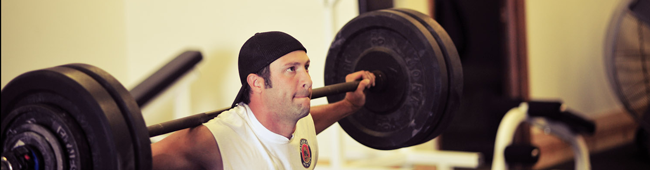
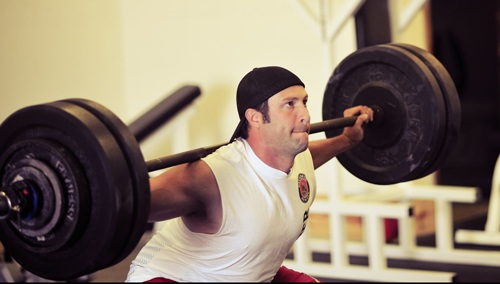
Hardware courtesy of @SoWrongFitness and his Off The Floor-powered powerlifting meet PR.

During the book process, I did several webinars and conference calls for various groups or people who asked me to speak to their audience. I found these to be REALLY fun to do, as you can imagine someone who loves talking about the deadlift would.

I then realized I should do a webinar that is open to all of YOU. This is your chance to ask the burning questions you’ve had about putting pounds on your deadlift, avoiding back pain when deadlifting or any other related topic.

To kick off the webinar, I’m going to give a short presentation on how to implement biofeedback and cover some of the most common questions people ask when it comes to implementing biofeedback in their training.

Then I’m going to get to your questions, as well as do a live Q&A.

You should go sign up right now.

In addition to the webinar – which is next Tuesday – I have also put together 3 videos covering some important deadlift topics. These are topics that come up again and again with clients and in coaching groups, so I wanted to give you a leg up.

Filed Under: Blog

by david 5 Comments

Open-Hand Strength: The Key to Strong Hands

Open-Hand Strength: The Key to Strong Hands

The old lifting adage is that if you can’t hold onto it, you can’t lift it. This is pretty obvious, and it doesn’t really give you any new information to work with. If it’s supposed to be a motivator to train grip strength, it doesn’t seem to be working.

Let me tell you what IS a motivation to train your grip: being able to pick up something that others can’t even budge off the ground because their fingers slip right off it. Success breeds success, and that kind of thing breeds an awfully strong desire for more success. Like this:

That lift alone was enough motivation for another year of grip training. Most people will never even budge an Inch dumbbell off the floor.

What is Open Hand Strength?

Open-hand grip training is the kind of grip training that allows you to pick up large, awkward objects without convenient handles. These are things that are big enough that they prevent you from wrapping your thumb around your fingers as in a traditional barbell lift or lifting something with a thin handle. Hence, open hand. Common lifting objects to test and train this type of grip strength include:

York blobs, which are heads of old York dumbbells that have been cut off. Lifting a York 50 is considered an elite level of grip strength:

york blob

Fat handled dumbbells, such as the famous Thomas Inch dumbbell, or modern circus bells like the Sorinex Bosco Bell.

DB-rack

Axles are incredibly popular in strongman competition, as well as forming a cornerstone of the grip sport trio of lifts.

mike-burke-24aa_lg

The Rolling Thunder rotating handle from Iron Mind is another staple in the grip athlete’s arsenal.

peter-m-rt_lg

Train It

You want to train your hands to pick up large objects. Good.

First thing’s first, if you’re willing to spend a little money than you need to get yourself some Fat Gripz. I feel like a broken record because I write about them so often. Here’s the thing, though: Prior to the invention of these cheap and handy silicone sleeves, you had to spend at least several hundred dollars on hard-to-find equipment. Now, for about forty bucks, you can turn anything into a fat-handled object.

Simplest thing to do? Put Fat Gripz on everything you do for 8 weeks. Pull-ups, deadlifts, rows, and presses. The works. You will see you hand strength go through the roof.

Next simplest hand-strengthener: Meander over to the dumbbell rack. Stand a dumbbell on its end on the ground. Grab it from the top with your fingers and thumb. Try to pick it up. Adjust the weight accordingly.

One of my favorite things to do with any grip lift is a 2-minute deadlift challenge. See how many times you can pick it up off the ground in two minutes. You can either stick to one hand at a time, or use both.

The big picture for training open-hand strength is to start with something that you can’t wrap your hand all the way around, and pick it up. If it’s too hard, make it a little bit lighter or easier. If it’s too easy, make it a bit more challenging.

Ready for a Challenge?

I don’t know where it originated, but a couple years ago my friends Adam T. Glass and Matt Brouse started doing this fat dumbbell challenge as a way to progress towards the Inch dumbbell. It’s a genius way to train because you get a very different training stimulus from each the three movements. Here’s what you do:

Load a fat dumbell handle (or Fat Gripz on a regular dumbbell handle) with an amount of weight that you can one-arm snatch. Work up to your max snatch that way.

Now add more weight, working up to a clean max.

Finally, continue adding weight until you work up to a deadlift max.

You can also train this in reverse, but the idea remains the same.

I haven’t tried this particular challenge in a while, so I’ll post my score later this week. Give it a shot, and post your numbers in the comments.

Filed Under: Blog

by david 7 Comments

Simple and Effective Pinch Training

Simple and Effective Pinch Training

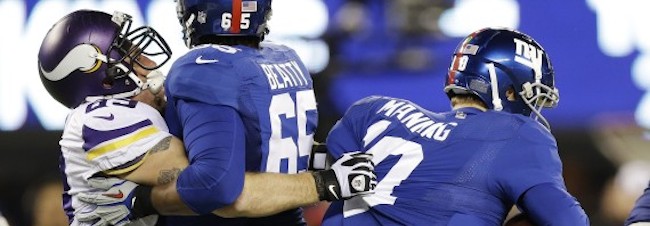
Continuing my in grip training series about how to be more like Jared Allen this week I want to address the bastard child of grip training that I despise: pinching. Pinch training is so important to hand strength and health and is equally neglected by standard gym practices and most people – even those who think they train their grip.

Pinch gripping involves using the forceps power of the thumb and fingers together. The range of things you can pinch range from small and thin objects like a thin piece of steel with a hole punched in it to hang weight from to the wide berth of two 45 pound standard plates sandwiched together.  In general, there is a width sweet spot where your pinch (depending on hand size and other anthropometry) is the strongest and on both sides of that sweet spot you can pinch a bit less.

They say a picture is worth a thousand words, so try this:

Pinch-pull-up-1
A ridiculous demonstration of hand strength by one of the strongest in the world.

If that isn’t convincing enough, here are the two most important reasons you should be doing at least a little bit of pinch work on a weekly basis:

First, in the same way that standard one-inch barbells and dumbbells don’t adequately stress the strength of the thumb, no typical gym movements adequately train this important function of the hand.  You simply can’t develop complete hand strength without working on pinch strength. No matter how good you may be at closing difficult grippers, holding on to heavy barbells, or strong with fat handled implements none of those things will carry over to the forceps power of the thumb and extended fingers.

The second reason is fairly counterintuitive. Training opposition movements is vital to maintaining health and function. For example, a smart trainer or trainee balances their pushing and pulling movements even going to far as to doing more pulling if their life movements consist of pushing movements or positions. With most grip training consisting of closing the hand against resistance, it stands to reason that the functional opposite would be opening the hand against resistance. This has led to the popularity of extending the fingers against rubber bands. The problem is – it doesn’t work. On the other hand, training the stabilization function of the fingers in a static and extended role does seem to maintain hand health and function. I first learned this from grip freak show Adam T. Glass and have since put it into practice. I owe the following useful analogy to him as well, that helps to understand why that may be:

An alligator has tremendously powerful jaws, able to clamp down with enough force to tear flesh and break bones. But, if a handler can wrap his hands around the closed mouth, the alligator is unable to open it. His jaw, much like the muscles of the hand, simply are not designed to open against resistance – rather they’re intended to close forcefully against it.

This is one of those counterintuitive practices that may not seem logical and can only be learned through experience and trial and error.

Training Your Pinchers

One of the very best ways to train pinch is with an adjustable pinch apparatus. This device, also known as a “euro pinch” allows you to easily adjust the width of the pinch surface, provides a uniform gripping surface for the hands, and is easily plate loaded. Up until recently the unfortunate answer for how or where to get one was “You can’t.” David Horne, a grip aficionado and legend based in the UK, produced and sold the devices but had stopped doing so. Serendipitously, Jedd Johnson has recently started selling the device.

The reality is most people aren’t interested in grip training enough to buy an expensive and special device for it. Fortunately, there are some really great simple products out there that will help you easily and cheaply train your grip.

The very easiest (and probably free) thing to do is to sandwich two weight plates together with the flat surfaces facing out. You can either hang weight from the holes, or just get a short piece of 2” pipe to put through the center and add weight to.

In this way, two 10s, two 25s, and two 45s give you different widths and weights to train with. A quick demo of that and a few other things you can use in this video:

Things to Try

Once you’ve got something difficult to hang on to, there are lots of things you can do with it:

  • Deadlift it, obviously.
  • Do pull-ups with it, if you’re strong enough.
  • Row it.
  • Attach it to something you can drag and drag it.
  • Do swings with it.
  • Farmer walk it.
  • Hold on to it for time.
  • Juggle it.
  • Add more weight to it, and do it again.


Filed Under: Blog

  • « Previous Page
  • 1
  • …
  • 69
  • 70
  • 71
  • 72
  • 73
  • …
  • 82
  • Next Page »

Olive Oil

Upcoming Workshops

    No events to show

Search

David Dellanave

David Dellanave, known most often as ddn, is a lifter, coach, and owner of The Movement Minneapolis in the Twin Cities. He implements biofeedback in training; teaching his clients to truly understand what their bodies are telling them. He’s coached a number of athletes who compete at the international level in sports ranging from grip to rugby, and his general population clients readily demonstrate how easy it can be to make progress.

Latest Tweets

  • Just now
  • Follow me on Twitter

Important Pages

  • Coaching
  • Seminars
  • Disclaimer
  • Terms of Service
  • Privacy Policy

Comments

  • david on 3 Tips for Lifting While Sorting Through SI Joint Pain
  • David Brochin on 3 Tips for Lifting While Sorting Through SI Joint Pain
  • Ken on How to Pass the RKC Snatch Test
  • Bethuel Njoroge on Wild Game Hunting: Inhumane or The Most Humane?
  • Jennifer Matthews on 3 Tips for Lifting While Sorting Through SI Joint Pain

Copyright © 2026 · Generate Pro Theme on Genesis Framework · WordPress · Log in