
ddn

David Dellanave

  • Blog
  • Programs
  • Coaching
  • Seminars
  • Contact

by david Leave a Comment

What To Do When You Can’t [Part 2]

What To Do When You Can’t [Part 2]

Last week I discussed a simple training framework for which direction to go in when you can’t go where you want to. I suggested that there might be yet another route to take, and of course lots of people wanted to hear more about that.

The long and short of it in case you didn’t read that one, you can read it here if you like though, is that when you can’t do the actual movement you want to train, because it hurts or doesn’t test well via biofeedback, you can pursue pieces of the whole. Eventually, when the problem that is stopping you from doing the specific is resolved, having trained the pieces will benefit the whole.

Sometimes, however, you can’t train components either. Typically you’d see this when you’re paying close attention to biofeedback, you have a pain issue you’re working through, and/or you’re training heavily for a sport which leads to a tendency to over-do certain movements.

In that case, the next step is to work on opposition movements. Literally, training the opposite. To use our example from last week, if you can’t squat (hip extension, knee extension, and so on) you would look at training hip flexion, and knee flexion.

An example of this that seems to be coming up lately is that everyone suddenly realized that all the hip external rotation and abduction (legs moving away from centerline of the body) you get from squatting and deadlifting heavy might be overdone and cause some problems.

The solution? Working on hip ADDUCTION (moving the legs toward the centerline). By this logic, probably won’t hurt to do some extra internal rotation as well.

Most of the time training opposition movements aren’t as fun or sexy as doing the things you want to do to get you to your goals. But, it’s a simple, quick, and super effective framework for figuring out how to get BACK to doing those things you want to do when you can’t because you’re hurt or trying to heed your biofeedback so that you don’t get hurt.

By the way, this is the kind of training philosophy and structure that I go over in great detail in my biofeedback training workshops. I’ve got two dates coming up in October, in Toronto and Manila. I’m not ashamed or too humble to say that previous attendees have said that the workshop completely changed how they approach their training (and coaching). I’d love to see you there.

Filed Under: Blog

by david Leave a Comment

What To Do When You Can’t

What To Do When You Can’t

Last night we had a totally age-appropriate birthday party for my wife, Jen. We went to one of those giant trampoline places, which if you have never gone are a total blast not to mention a great way to get your heart rate up for 30-60 minutes. You can just jump around on the trampolines, leap into the foam pit without breaking your neck (crawling out from which is exhausting), or try your hand at dunking a basketball on 3 different height hoops.

It was this last challenge that had everyone’s attention by the end of our time. Everyone could dunk on the two shorter ones, but I was the only one who had gotten the dunk on the highest hoop.

Jen, her friend Kim, and jumping Julie Read all had the bounce height, but try as they might they couldn’t connect it with a dunk.

One of the principles that guides my training philosophy is that of specificity. Put simply, you should train as close to the thing you want to be able to do as possible. For something like powerlifting that’s simple, you train the barbell back squat, bench press, etc. For a rugby player it’s not as simple but you’ll still sprint, push, lift, carry, etc. because there’s enough transfer to carry over to the sport.

The issue becomes, when you can’t apply specifity, what do you do? Let’s say you can’t back squat but you also can’t front squat (due to pain, or whatever). That’s when you break the movement down into components, and train the component parts. You may not be able to squat, but you may well be able to train hip extension, knee extension, anterior core stabilization, and so on. All important parts of squatting as a specific activity.

So when I saw failure after failure (at least a dozen) of the specific movement, I knew exactly what the intervention was. I told Jen to drop the ball, and go just focus on touching and grabbing the rim. In other words, a component. So she did that once.

The very next try with the ball? Nothin but net.

Sometimes we get so focused on practicing and practicing an activity, thinking that we’ll get it on the very next try, that we forget to break it down. It wasn’t even really a pregression because she was still jumping to full height, we just took a piece of it out.

Training components is a valuable way to work around issues, increase volume without compromising recovery, and speed up learning.

If you like, maybe next week I’ll talk about the next step down the training continuum for when you can’t do the specific.

Filed Under: Blog

by david Leave a Comment

Imagine Taking Phone Calls All Day Long

Imagine Taking Phone Calls All Day Long

Today two things happened that got my brain thinking in a slightly different way about something that I’d like to share with you. The first was when I was putting the finishing touches on a helpful comprehensive nutrition guide for one of my coaching groups, and the second was this article about stress that a friend sent. I highly recommend you read it when you have a moment.

In the nutrition guide I referred several times to the idea of “signals” to the body. So for example one of the effects of weight training is to signal muscle protein synthesis, to build muscle.

Then the article came across my desk and it got me thinking of an analogy that might be helpful:

Imagine that you have to answer a phone every time it rings. When it rings the message on the other end of the line tells you what to do next. Let’s imagine for a second that actually taking the call requires no energy and isn’t an interruption. Only what the message tells you to do has to be addressed.

What would those signals tell you to do?

Would you constantly be interrupted by emergencies big and small that you had to address? Before one was resolved you’d be interrupted to deal with another?

Would any of those calls tell you to take an hour of downtime, with no further calls coming in?

Would the calls tell you to do things like lift weights or do gentle stretching, or would they tell you to sit in front of the TV for hours?

One way to think of stress is as these phone calls. Long time readers will know that stress is something I write about and focus on often, and it’s not as simple as “stress is bad.” On face of it stress is just like these phone calls. The call isn’t inherently a problem, it’s the accumulation of those messages and what they tell you.

So another way to think of how you approach things is what calls do I have coming in? What messages or signals do those calls carry?

I hope this is a useful way for you to think about things.

Filed Under: Blog

  • « Previous Page
  • 1
  • …
  • 26
  • 27
  • 28
  • 29
  • 30
  • …
  • 82
  • Next Page »

Olive Oil

Upcoming Workshops

    No events to show

Search

David Dellanave

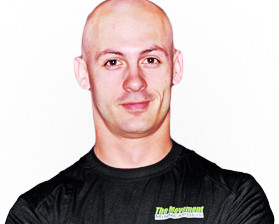
David Dellanave, known most often as ddn, is a lifter, coach, and owner of The Movement Minneapolis in the Twin Cities. He implements biofeedback in training; teaching his clients to truly understand what their bodies are telling them. He’s coached a number of athletes who compete at the international level in sports ranging from grip to rugby, and his general population clients readily demonstrate how easy it can be to make progress.

Latest Tweets

  • Just now
  • Follow me on Twitter

Important Pages

  • Coaching
  • Seminars
  • Disclaimer
  • Terms of Service
  • Privacy Policy

Comments

  • david on 3 Tips for Lifting While Sorting Through SI Joint Pain
  • David Brochin on 3 Tips for Lifting While Sorting Through SI Joint Pain
  • Ken on How to Pass the RKC Snatch Test
  • Bethuel Njoroge on Wild Game Hunting: Inhumane or The Most Humane?
  • Jennifer Matthews on 3 Tips for Lifting While Sorting Through SI Joint Pain

Copyright © 2026 · Generate Pro Theme on Genesis Framework · WordPress · Log in