ddn

David Dellanave

  • Blog
  • Programs
  • Coaching
  • Seminars
  • Contact

by david 1 Comment

What is the precautionary principle?

What is the precautionary principle?

When I was on my back from Manila, which was an absolutely fantastic trip that I’ll talk more about at another time, I posted an Instagram story of people dutifully walking into the body scanners at the airport and literally throwing their hands up to submit to the scan. It felt to me like an awfully apt metaphor for the way we’ve pretty much given up standing against authority in the face of eroding freedom. I’ve opted out of the body scanner ever since Jen turned me on to the option many years ago.

Naturally, this generated a lot of questions. The easy one is “can you really opt out, and how?” Simple, you just tell them you opt-out (or as I like to think of it, opt-in for the pat down lovin) and they will escort you around the machine where you’ll get a begrudging pat-down by the nice TSA officer. I’m always very nice because they probably hate the pat-down as much as I actually do.

The harder question is “Why? Aren’t they harmless?” and of course one in four respondents quoted back to me the common refrain they’ve been sold which is “Isn’t the radiation less than you’d get on the actual flight?”

Before I tackle the specifics of the body scanners, I think this is a great example to demonstrate the precautionary principle.

The precautionary principle is the idea that, given unknown but potentially great harm, you should avoid the risky action whenever possible and that the burden of proof lies on those making the decision or applying the harm to prove that it’s harmless.

Another way to think of this is in terms of cost and benefit.

If something has a (potentially) extremely high cost, but provides very little benefit, we should be exceptionally cautious in using it.

The big idea of cost is something I’ve written about extensively and is an idea that is woven into how I live my life. For example, when it comes to biofeedback training one of the things I teach is that you can always do movements that don’t test well, but you may pay a higher cost. That might not be worthwhile on a training day, but if it doesn’t test well on meet day maybe it’s worth going for broke. The important thing is that you recognize the cost, weigh the benefit, and make an informed decision.

One of the most common examples of the precautionary principle being invoked (or not being invoked) is when it comes to Genetically Modified Organisms. The fact is, despite a modicum of studies being done in infinitesimally small parts of an incomprehensibly complex system, we don’t really know everything that happens when you splice part of the genome from one living thing into another (note that GMO is not the same as traditional cross-breeding like we do with dogs and apples [not at the same time, you can’t breed a dog and an apple]). It could be totally harmless, or it could be the butterfly effect that destroys the entire planet’s ecosystem. Big shrug emoji because not only do we not know, it’s almost impossible to know. So the precautionary principle would say we should be exceedingly careful how we proceed, because the risk of harm is so great.

But, you say, David there is great benefit from GMO we are able to feed a starving planet. Fine, let’s pretend for a second that’s true then maybe it’s worth it.

Going back to the body scanners, there’s a very simple cost-benefit. You get almost no benefit by participating, and it potentially exposes you to great harm. The extra 3 minutes it takes to get a pat-down isn’t worth it.

It’s entirely possible that the radiation you get from having a cell phone in your pocket all day is many times worse, but the benefits are so (ok, arguably) great that you could say it’s worth the potential harm.

What harm? Glad you asked. The general consensus in the U.S. (I’ll let you figure out the motivations) has been that any radiation that is non-ionizing (anything lower frequency than ultraviolet) is basically harmless. But the WHO and the International Agency for Research in Cancer actually classifies non-ionizing radiation as potentially carcinogenic. Several European countries have ditched the body scanners completely because they don’t think they’re harmless AND they found that the false alarm rate was so high they were nearly useless. So much for the benefit side of the equation.

So what about the claim that you get more radiation from the flight itself. On the face of it, this is true. Looking at the raw exposure numbers it’s true that you get several times more radiation just being at the higher altitude during the plane ride. But as explained by several UCSF faculty in biophysics and biochemistry in a letter to Obama (actually to his asst. for science and tech) in 2010, the exposure on a plane ride is distributed over the entirety of your body. In a body scanner, the radiation is focused on a millimeter layer of skin. Which means that the actual exposure for that tissue is many times higher than it would be if it were distributed across the whole body.

But that’s not all. As a single example, one study showed that indeed non-ionizing radiation can cause genetic damage. I quote: “Hence, this project confirmed the existence of THz genotoxicity, but it remains unclear under which specific conditions such effects occur.”

Which is a perfect summary because it conveys the limitations of science in this regard. When it comes to something that is potentially very harmful, you need to test the exact specific conditions, not extrapolate and hope for the best.

When it comes to the body scanners I certainly don’t care what you personally decide to do.

But knowing and understanding what the precautionary principle is will serve you greatly.


Filed Under: Blog

by david Leave a Comment

Four Travel Habits to Make It Awesome

Four Travel Habits to Make It Awesome

You take a bite of your pasta that tastes like wet cardboard layered with white glue. Giving up, you unwrap the brownie and chomp down only to wonder what they used to color it brown, because it certainly isn’t chocolate. Your travel experience, whether the purpose is to get from point A to point B or to enjoy the sights along the way vary as much as people’s feelings about travel. I know people who won’t get on a plane under any circumstances and folks who would drop anything and walk out the door given a free ticket. Over the years and miles I’ve learned a few things that have made travel immensely more pleasurable and something I look forward to regardless of the circumstances.

Packing

When you’re packing or preparing, remember that if you bring your ID (or passport if international), a form of payment like a credit card, and your cell phone you can take care of pretty much anything you forget or any issue that might come up. People drive themselves crazy trying to make sure they didn’t forget anything. While it’s certainly annoying to forget your swimsuit or USB battery pack these are things you can pretty easily replace. Focus your attention on remembering these three things, and chill about everything else.

Leaving Home

Leave your house cleaned up and your bed made. Normally I’m fine with a bit of a messy house and I basically never make the bed. Trust me when I say I’ve experienced this both ways. I’ve come home to a messy house plenty of times, and I’ve come home to a clean house a bunch of times. It feels remarkably better to come home to a clean house and especially a made (preferably with fresh sheets the night before you leave) bed. Even more so if you get home late in the day or evening. Before I leave I look around and say “do I want to see that exactly as I left it when I get home?

Time

Leave more time. It sucks to get up early, it sucks to spend more time at the airport than necessary, it sucks to sit around waiting. But what sucks even more is missing the boat. Time, even more than money, is the currency of travel. Give yourself extra “spending money.” You can always buy things you forgot, but in a lot of cases you can’t buy more time. When you’re stuck on the freeway in a totally unexpected traffic jam there is no amount of money that is going to get you there faster.

Time, even more than money, is the currency of travel.

Click To Tweet

You won’t regret getting there too early, but you’ll always regret not having left enough time for the unexpected.

Change Your Mind

Finally, adjust your mindset so that you look at travel as truly about the journey, not the destination. This is harder to do when you’re traveling for work or a very specific purpose, but it’s still good to do. Realizing that whatever happens, even if it seems like an inconvenience or a bad thing, is part and parcel of the adventure of travel. The more you embrace it, the more you’re going to enjoy your travel and the more you’re going to get out of it.

This final point relates to time being the currency of travel as well. Modern travel is nothing short of magic. That you can wake up in Rome, have a cornetto and a cappuccino, and then lay your head on a pillow in New York City is beyond anything that should even be possible. Which is to say that if you planned to fly in at 9am for an 11am meeting and you’re not going to make it that’s on you, not the fault of the unexpected three-hour delay. The fact that you didn’t get dysentery and die on your voyage is a miracle.

Like Louis CK says: “everything’s amazing and nobody is happy.” Relax and enjoy the ride.

Filed Under: Blog

by david Leave a Comment

Adventure Why? Because You Can.

Adventure Why? Because You Can.

Today is an interesting day because it marks the start of dual adventures the kind of which people rarely seem to go on anymore. Jen and I are both departing for international travel, separately.

For her part Jen is going to Italy for five weeks. The first response most people have had to this is “What for?” or “Why?” Which is odd to me because why do you need a reason to go to Italy for five weeks beyond the myriad reasons which should instantly materialize in anyone’s mind who has even a modicum of awareness of the world they live in. It’s almost as if in this modern means-tested productivity-enhanced society it’s impossible to fathom doing something without an explicit purpose.

Alas, ostensibly her purpose is to attend an intensive immersion language school to learn Italian. But really, let’s be honest, she’s doing it because we’ve specifically crafted our lives so that doing this kind of thing is only a plane ticket and a house-and-dog-sitter away so why wouldn’t you take advantage of it?

I’m going the opposite direction and getting on a plane to Manila tomorrow. I say getting on a plane not so much as a figure of speech but because literally the main purpose of this trip is because I wanted to fly on one of the last U.S.-carrier flights on the 747, which Delta happens to be operating to the Philippines.

I’ve always been an aviation buff and ever since I was a little kid lucky enough to fly on Alitalia and KLM (“Royal Dutch Airlines” in TV commercial announcer voice) routes on the iconic jumbo jet I’ve revered the 747. I don’t think it’s a coincidence that Air Force One is a 747 despite the fact that surely many other platforms would have done the job, some maybe better.

It’s hard to describe the significance of the 747. You could talk about how iconic the design is, a jet that stands out in skies full of planes that to the untrained observer all look the same. How many people could even tell you how many engines the plane they just stepped off of had? But even little kids know the distinctive upper-deck hump of the 747. It’s the Flatiron Building of jumbo jets.

You could talk about the era that the leviathan seemed to be ushering in when it first took to the sky in 1969. Sure the height of the cold war was still fresh and the thought of intercontinental ballistic missiles crossing the continents was still very much at the forefront of people’s minds, but the economies of scale that the big jet brought about opened the possibility of a world where business, prosperity, and peace would be more likely to cross those skies. Maybe it’s fitting that the era of the 747 is in its twilight after all.

You could talk about its massive proportions and literally over-the-top luxury (the upper deck is a first-class affair) match American’s typical exceptionalism and desire for bigger, faster, more. But I’ve probably talked enough about an airplane for a fitness guy.

My point is that I don’t need any reason to fly to Manila other than my love of airplanes and desire to take one last ride on one. The bonus is that I’ve created a life where not only can I do so, but I can teach a biofeedback workshop while I’m there which covers my expenses.

You can do this too. The world has changed in the past several decades and on the downside there is no longer much of a sense of loyalty, community, or responsibility from corporations and to government to ensure that people have a good life. The upside to this is that there is very likely the opportunity and possibility for you to manufacture exactly the life you want, if you take the reigns and opt out of the now defunct path that has been paved for you. Go to school, get good grades, go to college, get a job, take one vacation per year, retire with a pension doesn’t work anymore – those days are gone. (This is where I acknowledge varying degrees of privilege. If you’re reading this I’m going to wager that you have a level of privilege sufficient to more or less chart your own course. If I’m wrong, I’m wrong.)

The thing that it takes is a willingness to be unconventional and uncomfortable. To step off the beaten path and figure out how you’re going to take that knowledge, expertise, skill, and creativity that is locked up in your brain and turn it into value. Sell something you make. Consult. Teach something you’re great at to people who want to learn it. Solve a problem you see.

How does this relate to fitness? To me everything you want to do starts with the physical. There is something about transformative about knowing you’re going to do something hard every day, doing it, and then looking back on how you just did it. Physical movement and transformation begets other movement and transformation. It’s all connected.

So, I’m off to pack a bag. Wish us luck.

Filed Under: Blog

  • « Previous Page
  • 1
  • …
  • 21
  • 22
  • 23
  • 24
  • 25
  • …
  • 82
  • Next Page »

Olive Oil

Upcoming Workshops

    No events to show

Search

David Dellanave

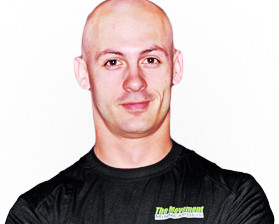
David Dellanave, known most often as ddn, is a lifter, coach, and owner of The Movement Minneapolis in the Twin Cities. He implements biofeedback in training; teaching his clients to truly understand what their bodies are telling them. He’s coached a number of athletes who compete at the international level in sports ranging from grip to rugby, and his general population clients readily demonstrate how easy it can be to make progress.

Latest Tweets

  • Just now
  • Follow me on Twitter

Important Pages

  • Coaching
  • Seminars
  • Disclaimer
  • Terms of Service
  • Privacy Policy

Comments

  • david on 3 Tips for Lifting While Sorting Through SI Joint Pain
  • David Brochin on 3 Tips for Lifting While Sorting Through SI Joint Pain
  • Ken on How to Pass the RKC Snatch Test
  • Bethuel Njoroge on Wild Game Hunting: Inhumane or The Most Humane?
  • Jennifer Matthews on 3 Tips for Lifting While Sorting Through SI Joint Pain

Copyright © 2026 · Generate Pro Theme on Genesis Framework · WordPress · Log in